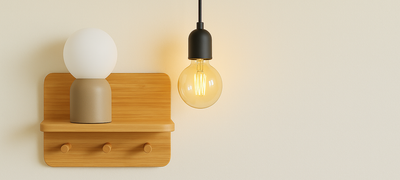

Light doesn't just help you see a room — it changes how your brain behaves in it. The same living room can measurably lower your heart rate under warm, dim light and mildly stress you under cool, bright light, even though nothing else in the room has changed. That's not a design metaphor. It's biology, and understanding it is the difference between a room that just looks nice and one that actually feels right.
Your Body Is Reading the Light, Not Just Your Eyes
Beneath the retina cells you use to see, a separate set of light-sensitive cells feeds directly into your circadian clock. They respond most strongly to short-wavelength blue light and barely react to warm tones — which is why a cool white kitchen light at 6am can genuinely help you wake up, and that same light at 9pm can quietly delay your melatonin release for hours. You're not imagining that bright, cool light late at night makes it harder to wind down.
Color Temperature Is a Mood Dial
Psychologically, warm light (2200K–2700K) reads as safety and rest — it's the same spectrum as fire and sunset, two things humans have associated with shelter for a very long time. Cool light (4000K–5000K) reads as daylight and alertness, which is why offices, garages, and gyms lean cool while bedrooms and dining rooms lean warm. Get the temperature backwards for the room's purpose — cool light in a bedroom, warm light in a home office — and people can't always say why the space feels wrong, but they feel it.
Brightness Changes How Willing You Are to Linger
Dim lighting doesn't just look cozy — it measurably lowers arousal and encourages slower behavior, which is exactly why restaurants dim the lights in the evening and retailers brighten them for daytime browsing. At home, a living room lit for evening lingering and a kitchen lit for morning efficiency shouldn't share the same brightness, even if they share the same fixtures — dimmers do more psychological work than most people give them credit for.
Using This on Purpose
You don't need to memorize circadian science to use it. As a rule of thumb: go cooler and brighter in spaces built for alertness (kitchens, offices, workout spaces) and warmer and dimmer in spaces built for rest (bedrooms, living rooms, dining rooms) — and where a room does both jobs at different times of day, put it on a dimmer or tunable-white fixture so the light can change with the moment instead of forcing the moment to match the light.
Bringing It Home
The right light doesn't just illuminate a room — it tells your nervous system how to feel in it. Choosing fixtures with the room's actual psychological job in mind, not just its square footage, is the fastest way to make a space feel less like it's merely lit and more like it's working with you.